

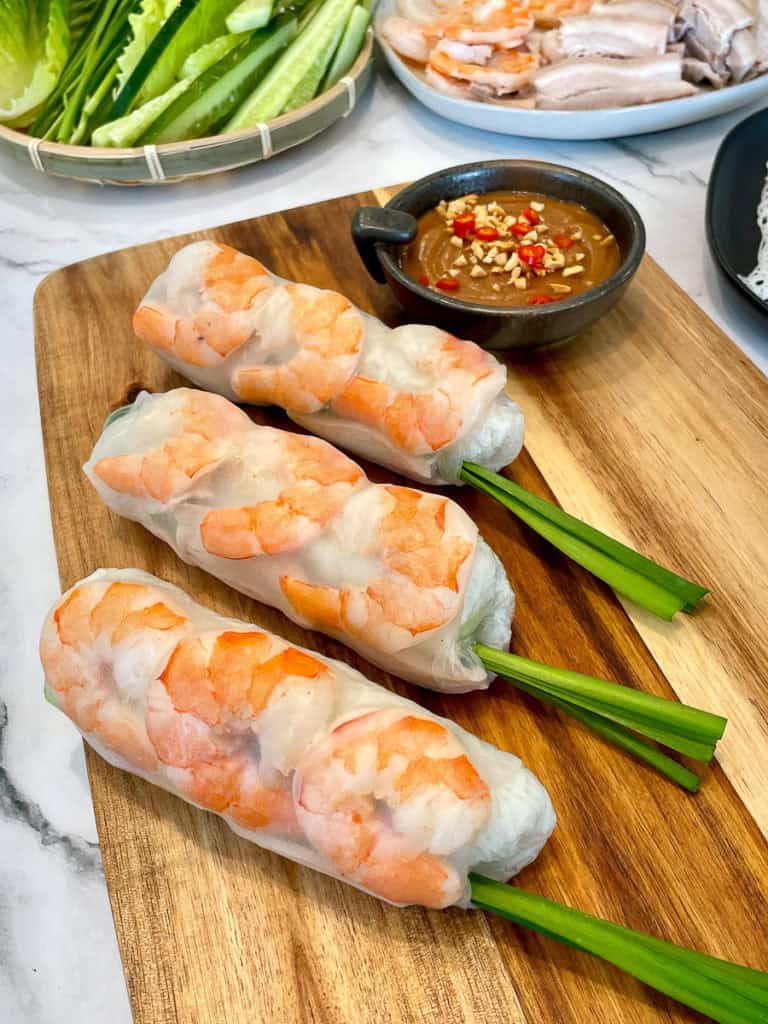
This fresh Vietnamese Spring Roll recipe is always a crowd pleaser. Vietnamese spring rolls served with Peanut Dipping Sauce make for a great appetizer, but can also be made and enjoyed as a refreshing appetizer or dinner at home as well. The best part about making these Vietnamese Spring Rolls recipe at home is that you can customize any way you like!
Save this recipe! 💌
Whats not to love about fresh spring rolls with the chewy rice paper wrappers, and proteins, veggies and herbs of your choosing ? Vegetarian spring rolls are fun with added papaya, mango or tofu, and spring rolls with grilled meats or fish are tasty as well. Wether you call these salad rolls or spring rolls, the possibilities are endless.
Jump to:
🥘 Ingredients
- 1.5 lbs Shrimp (27 Pieces Shrimp)
- 2 lbs Pork Belly
- 1 slice Ginger
- 18 sheets Rice Paper
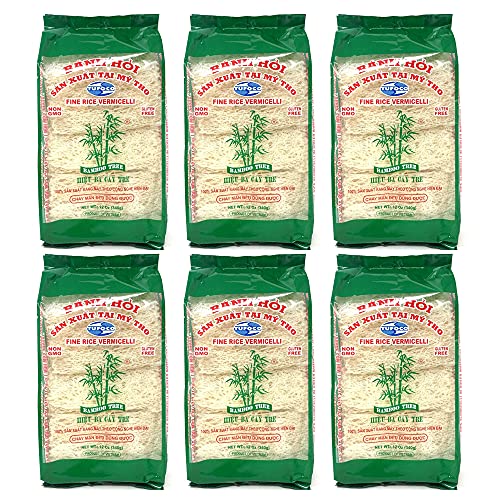
- 1 Pack Banh Hoi or Rice Vermicelli Noodles
Veggies & Herbs
- 1 head Lettuce
- 1 Cucumber
- Cilantro
- Mint
- Chives
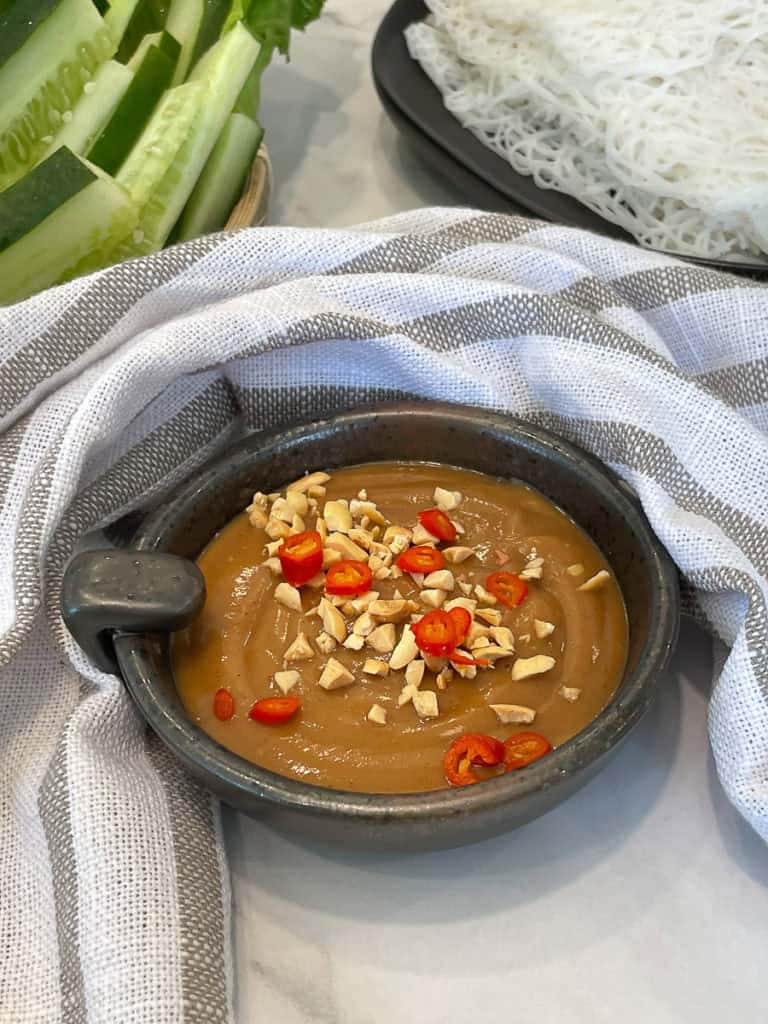
Peanut Sauce
- ⅓ cup Smooth Peanut Butter
- 3.5 tbsp Hoisin Sauce
- ½ tbsp Fish Sauce
- ¼ tbsp Rice Vinegar
- ¼ tbsp Sesame Oil
- ½-3/4 Cup Stock (From Boiled Pork & Shrimp)
- 1 tbsp Crushed Peanuts
- Thai Pepper or
- Chilli Paste

🔪 Instructions
The Cooking
- Add Pork belly and ginger to a pot and cover with room temp water and bring to a boil on high heat. Water should cover the pork by at least an inch or so.
- After 10 minutes remove the impurities that come to the surface. I usually use a skimmer but you can also use a ladle or spoon.
- Cover with a lid and turn down heat to medium and simmer for another 25 minutes until the pork reaches an internal temp of 145. The skin should be soft enough you can pierce it with a fork or chopstick without too much force.
- Remove the pork when it is done cooking, and cover with plastic wrap or a lidded container. If left uncovered , the meat can darken.
- Add the unpeeled shrimp into the same pot and cook only for 2 minutes until no longer transparent. Scoop out the shrimp once it is done cooking , and transfer directly into an ice bath.
- Strain out some of the broth used to cook the pork and the shrimp for the dipping sauce (optional). You can also use warm water instead of the broth. I usually add about ½ Cup of broth to my peanut sauce but save about 1 cup to be on the safe side. If you do not plan to use your broth for the peanut sauce, just discard it.
- Put 18 banh hoi noodles into a heat proof bowl and pour boiling water to cover for about 1.5 minutes. Drain the noodles and rinse with cold water. You can also use about ½ pack of vermicelli noodles and cook according to package instructions.
The Prepping
- Wash , dry and prepare your veggies. If using chives, I usually cut them about 6-7" long so they leave a little tail that hangs out of the roll.
- Remove the shell and the tail from the shrimp and devein. Slice the shrimp in half along the devein slit.
- Slice the pork belly into thin strips, each about 1.5" wide
- Crush your peanuts , and slice thai peppers (if using)
The Sauce
- Into a bowl combine the following ingredients: ⅓ cup Smooth Peanut Butter, 3.5 tablespoon Hoisin Sauce, ½ tablespoon Fish Sauce, ¼ tablespoon Rice Vinegar, ¼ tablespoon Sesame Oil
- Slowly add the stock or warm water and whisk to combine. I usually use about ½ a cup. ½-3/4 Cup Stock (From Boiled Pork & Shrimp)
- Garnish with: 1 tablespoon Crushed Peanuts, Thai Pepper or, Chilli Paste
🥢 How to Wrap Spring Rolls - step by step
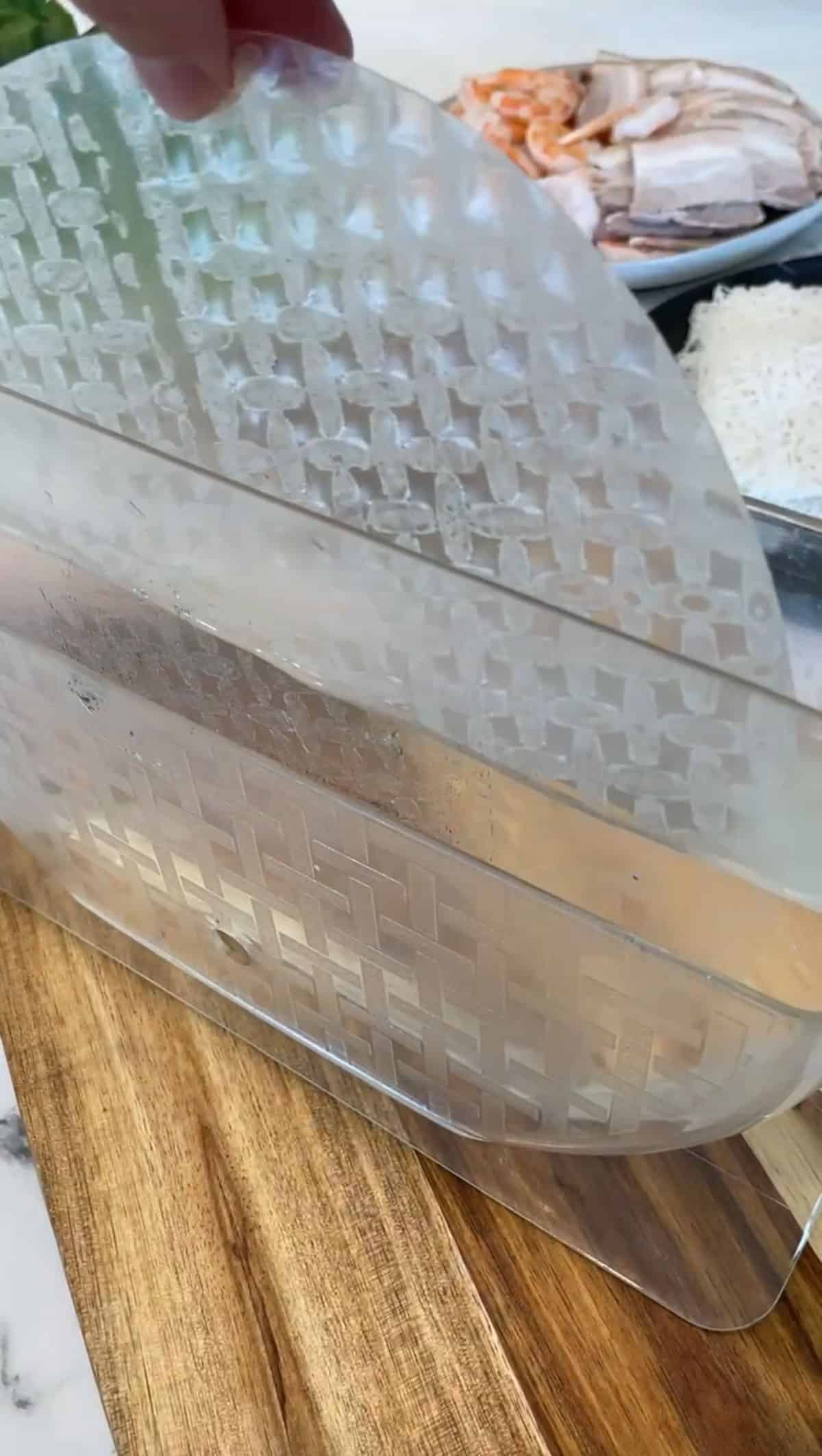
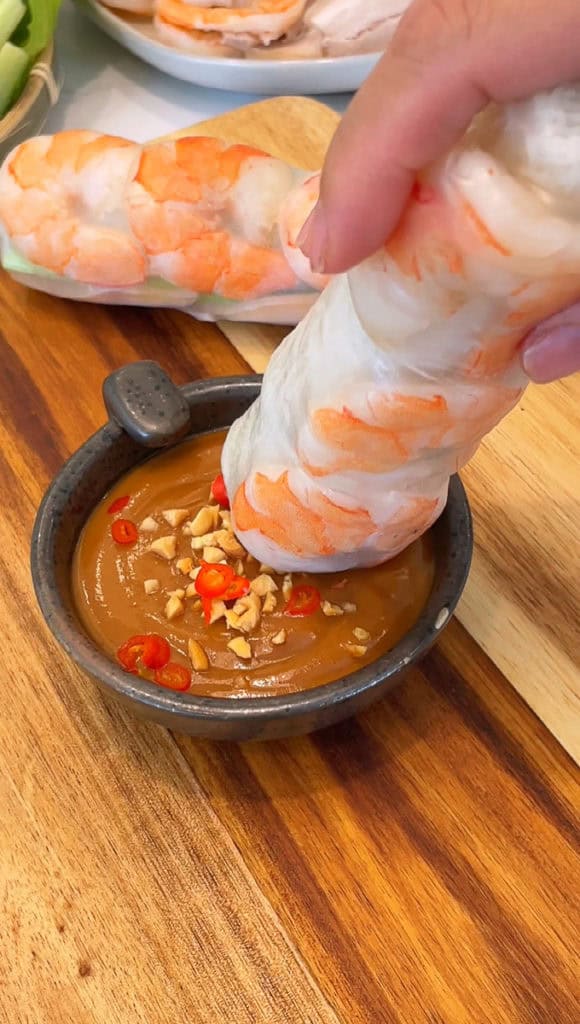
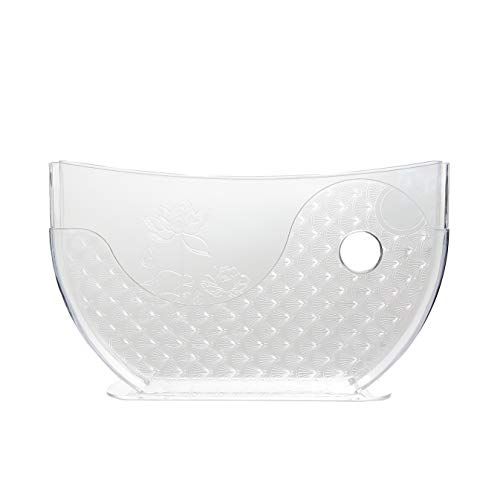
Step 1: Dip rice paper into room temperature water either using a rice paper bowl dipper or a plate.
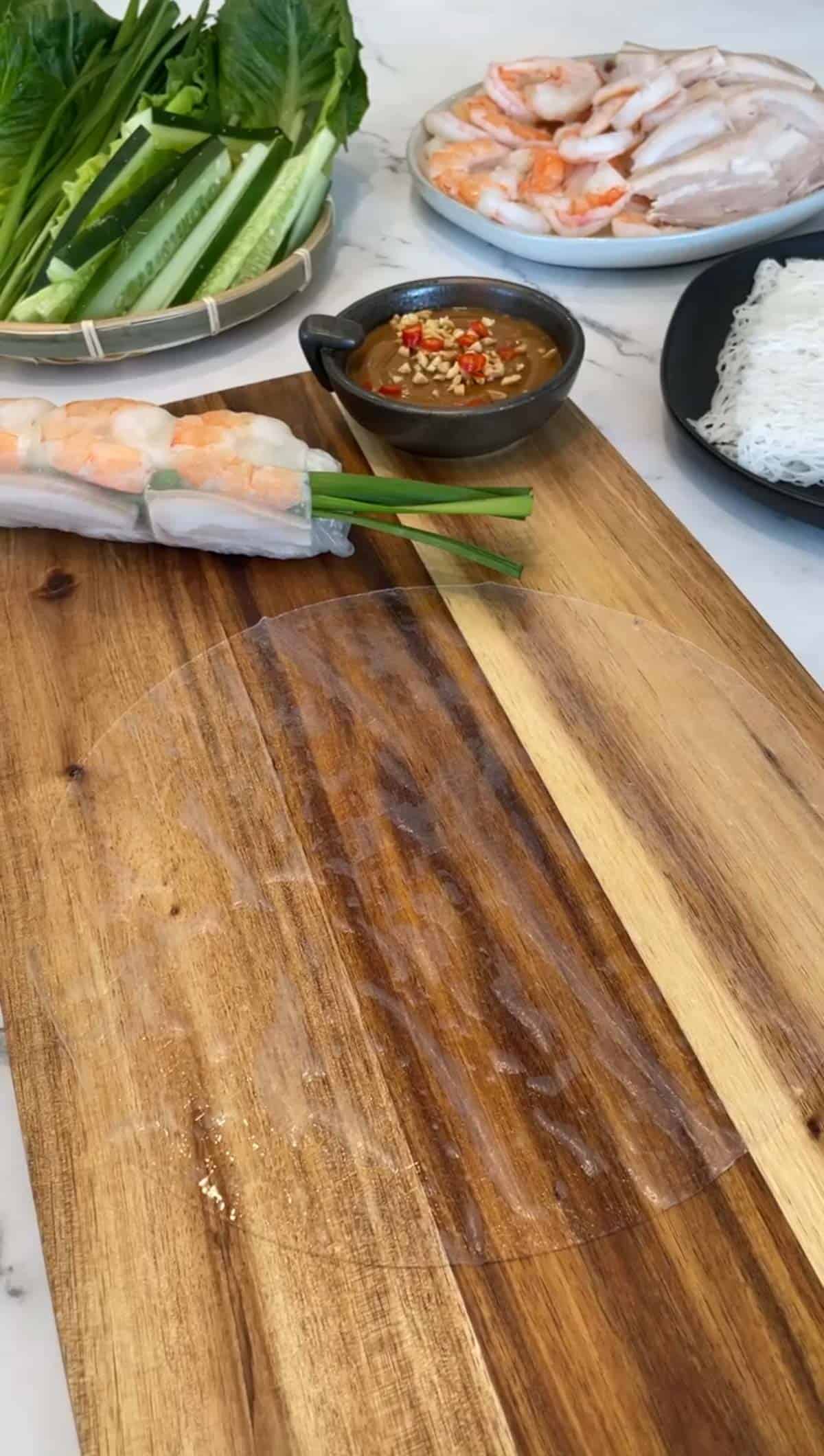
Step 2: Quickly dip the paper on all sides and transfer to a plate. The rice paper should still be stiff will continue to soften.
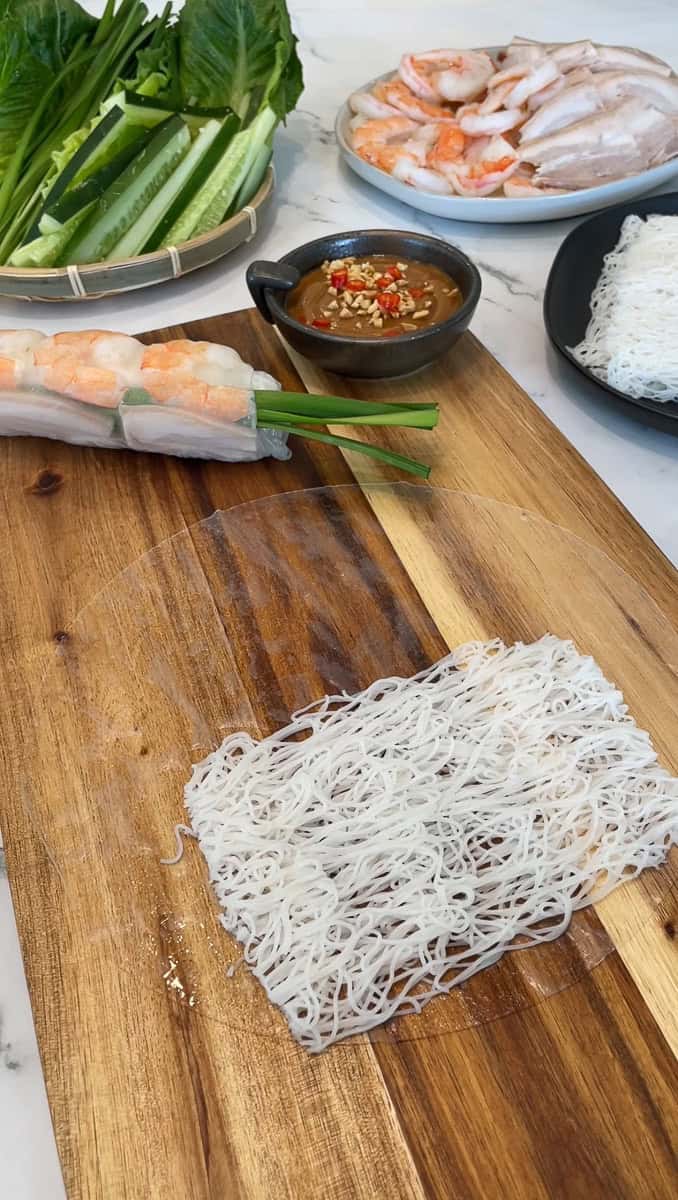
Step 3: Assemble the roll by adding the banh hoi or vermicelli at the bottom of the rice paper.
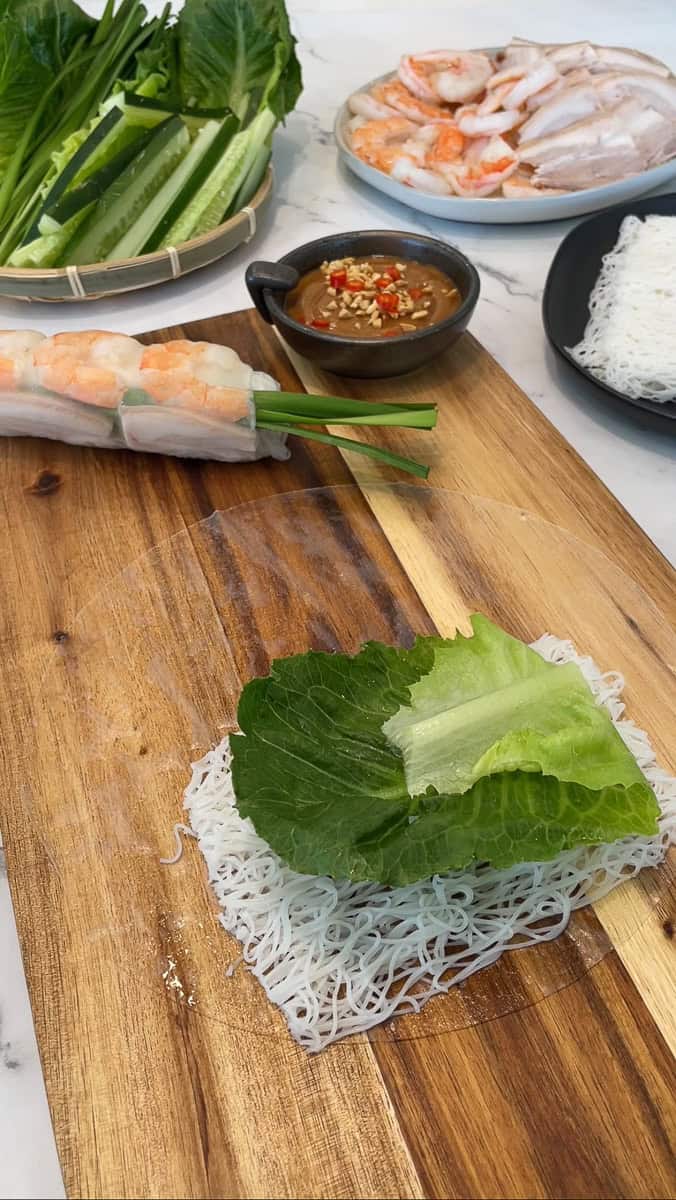
Step 4: Leave about 1-1.5" of space on the sides of the rice paper for folding. On top of the noodles, add the lettuce
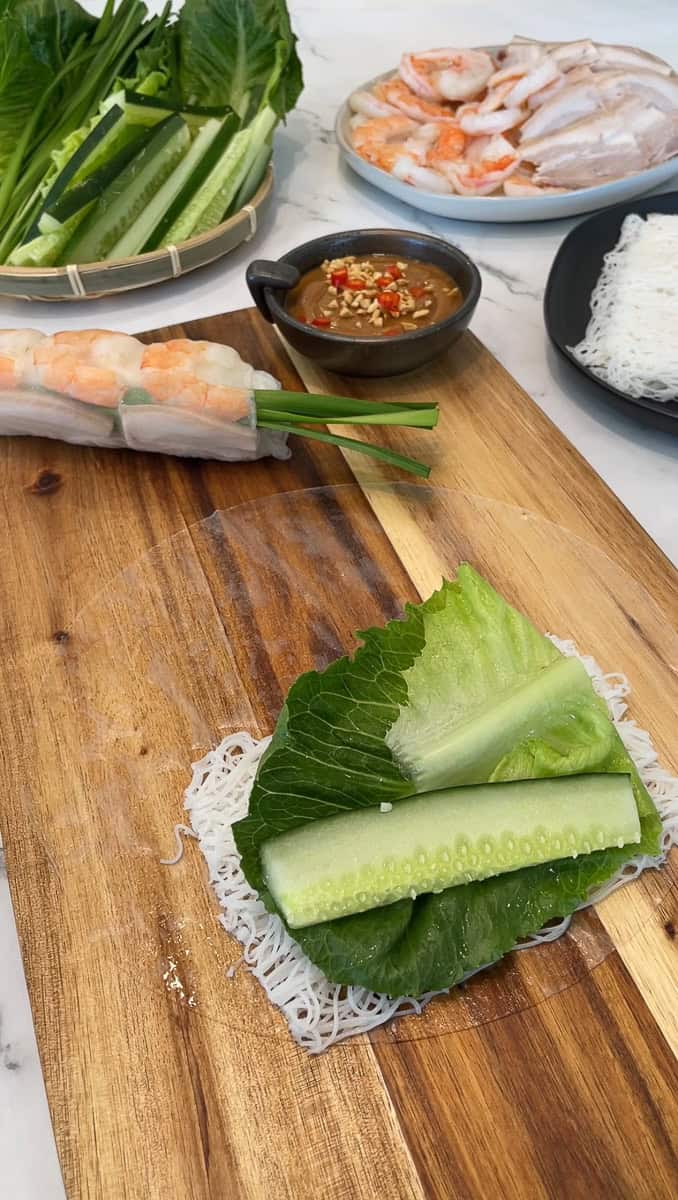
Step 5: Then cucumbers and other leafy herbs (but not the chives yet)
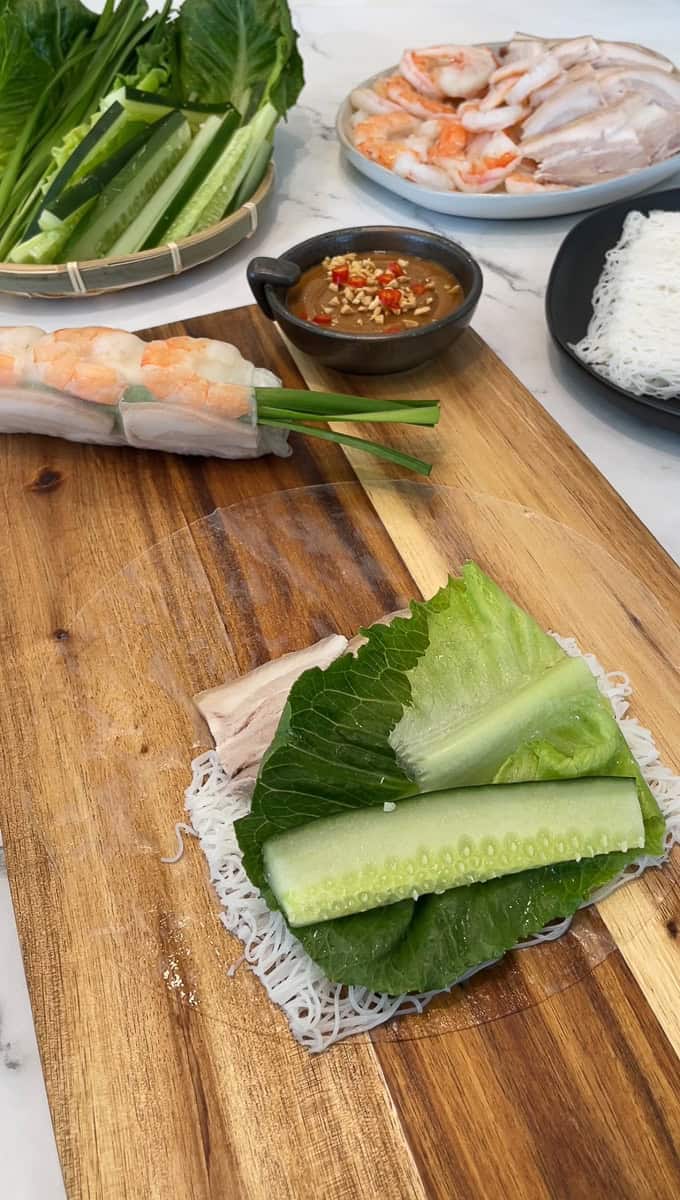
Step 6: place the pork slightly above the noodles. Use the noodles as your guide and maintain the same width.
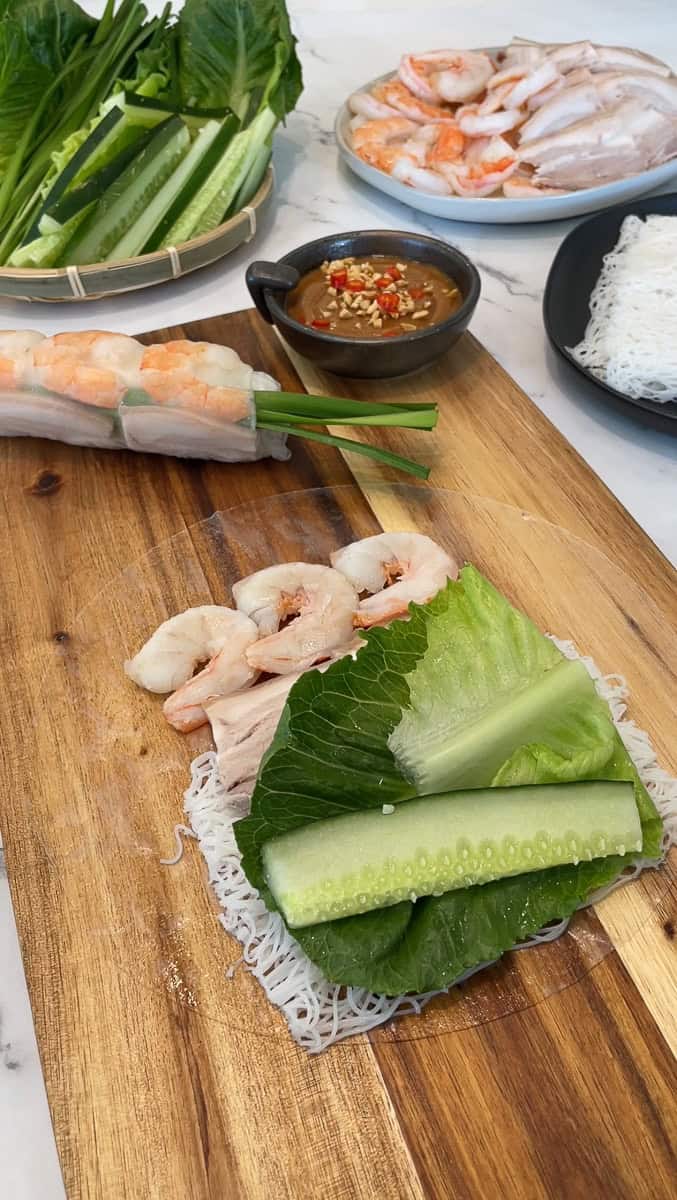
Step 7: add the shrimp above the pork
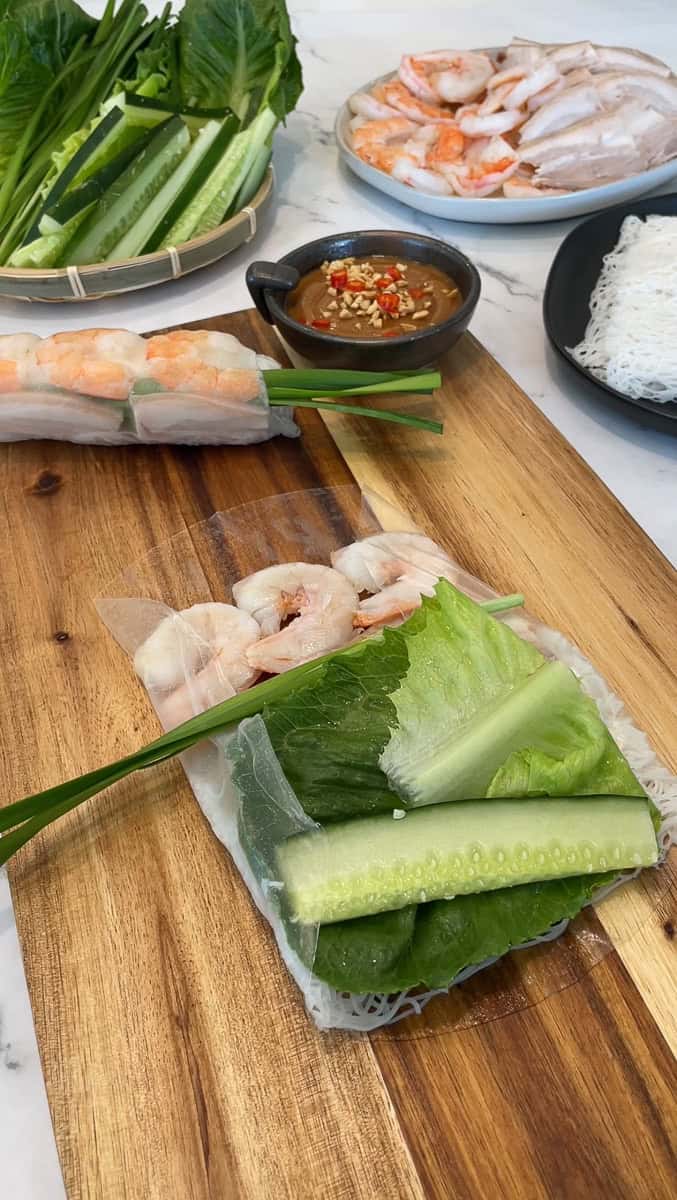
Step 8: Fold the right side of the rice paper in, and then the left. If you are using chives, you can lay it now over the pork.

Step 9: Carefully lift the edge of the rice paper closest to you and start rolling.
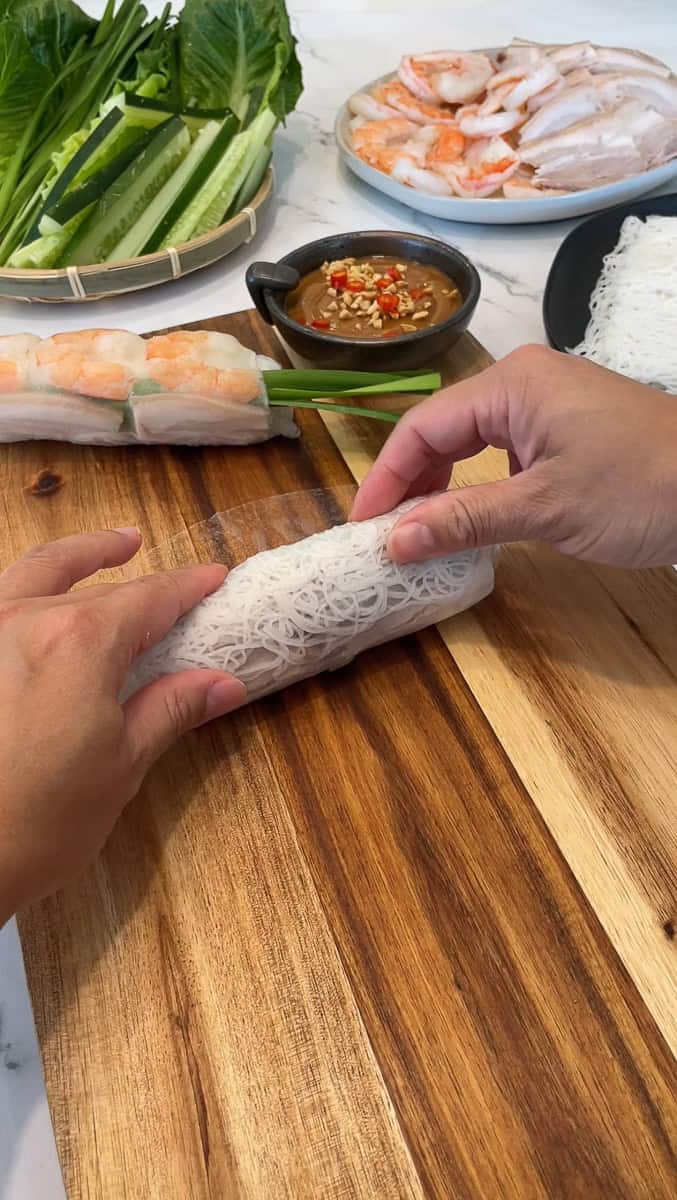
Step 10: As you lift the rice paper, try to roll tightly while also guiding the sides of the rice paper into the roll.

Step 11: Continue rolling past the pork and shrimp until fully sealed.
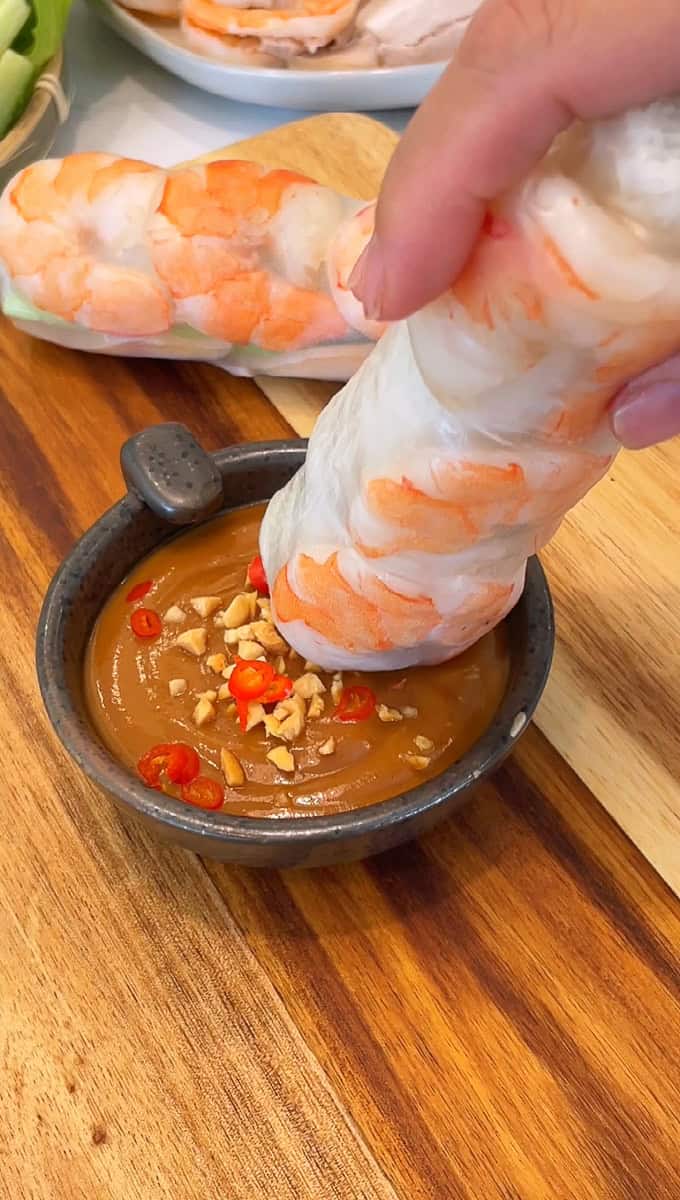
Step 12: Enjoy! If you are new to rice paper rolling, this just takes a little practice! Even if it becomes a sticky mess, it still tastes good with peanut sauce 🙂
Hint: As tempting as it may be to pack as many ingredients as possible into each spring roll, less is often more when it comes to filling. Overstuffing the spring rolls can make them difficult to roll tightly and may cause the wrappers to tear. Instead, aim for a balanced combination of ingredients, ensuring that each bite offers a harmonious blend of flavors and textures.
🍗 Substitutions
- Herbs - Feel free to experiment with your favorite herbs. Cilantro and mint are also great options.
- Vegetarian: Replace shrimp with tofu or add more vegetables like bell peppers, avocado, or jicama for a vegetarian version.
🌶️ Variations
- Gluten-free: Ensure all sauces and ingredients are gluten-free, and use gluten-free rice paper wrappers.
- Spicy: Add a kick of spice by incorporating sliced jalapeños or a drizzle of sriracha sauce into the filling.
🫙 Storage
- If preparing ahead, store assembled spring rolls individually wrapped in plastic wrap.
- Leftover spring rolls can be stored in the refrigerator for up to two days. The rice paper may tear during storage. However, they are best enjoyed fresh.
💡 Top tip
Softening the Spring Roll wrapper, rice paper, is a crucial step that can make or break your spring rolls. Dip the rice paper into room temperature water for just a few seconds until it becomes pliable but still slightly firm. Avoid soaking it for too long, as it will continue to soften as you assemble the ingredients, and overly soft wrappers are prone to tearing.
💭 FAQ
A: I have tested with all temperatures of water, and room temp water seems to work the best for me. The warm and hot water break down the rice paper too quickly and causes the rice paper to be more delicate and tear. I like to take my time when rolling so using the room temp water is perfect.
A: Spring rolls consist of a thin, translucent rice paper wrapper filled with a mixture of finely sliced vegetables and proteins like shrimp pork or tofu. Popular in Asian cuisine, spring rolls are enjoyed as appetizers or snacks, showcasing a variety of regional variations and fillings.
Spring rolls are typically wrapped in thin, translucent rice paper and filled with fresh vegetables and proteins like shrimp or pork, offering a lighter and refreshing texture. In contrast, egg rolls are wrapped in a thicker, egg-infused wheat flour wrapper and filled with cabbage, carrots, and often meat like pork or chicken, resulting in a crunchier and more substantial texture when deep-fried.
🥗 Best Served with
These are my favorite dishes to serve with Spring Rolls:


🥡 More Takeout Recipes
Looking for other recipes like this? Try these:


📖 Recipe Card
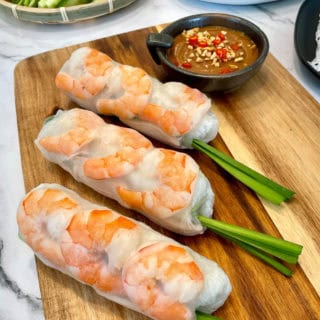
Vietnamese Spring Rolls with Easy Peanut Sauce
Equipment
Ingredients
- 1.5 lbs Shrimp 16-20 Count (27 Pieces Shrimp)
- 2 lbs Pork Belly
- 1 slice Ginger
- 18 sheets Rice Paper
- 1 Pack Banh Hoi ( 18 pieces)
- ½ Pack or Vermicelli Rice Noodles
Veggies & Herbs
- 1 head Lettuce
- 1 Cucumber
- Cilantro
- Mint
- Chives
Peanut Sauce
- ⅓ cup Smooth Peanut Butter
- 3.5 tablespoon Hoisin Sauce
- ½ tablespoon Fish Sauce
- ¼ tablespoon Rice Vinegar
- ¼ tablespoon Sesame Oil
- ½-3/4 Cup Stock (From Boiled Pork & Shrimp)
- 1 tablespoon Crushed Peanuts
- Thai Pepper or
- Chilli Paste
Save this recipe! 💌
Instructions
The Cooking
- Add Pork belly and ginger to a pot and cover with room temp water and bring to a boil on high heat. Water should cover the pork by at least an inch or so.
- After 10 minutes remove the impurities that come to the surface. I usually use a skimmer but you can also use a ladle or spoon.
- Cover with a lid and turn down heat to medium and simmer for another 25 minutes until the pork reaches an internal temp of 145. The skin should be soft enough you can pierce it with a fork or chopstick without too much force.
- Remove the pork when it is done cooking, and cover with plastic wrap or a lidded container. If left uncovered , the meat can darken.
- Add the unpeeled shrimp into the same pot and cook only for 2 minutes until no longer transparent. Scoop out the shrimp once it is done cooking , and transfer directly into an ice bath.
- Strain out some of the broth used to cook the pork and the shrimp for the dipping sauce (optional). You can also use warm water instead of the broth. I usually add about ½ Cup of broth to my peanut sauce but save about 1 cup to be on the safe side. If you do not plan to use your broth for the peanut sauce, just discard it.
- Put 18 banh hoi noodles into a heat proof bowl and pour boiling water to cover for about 1.5 minutes. Drain the noodles and rinse with cold water. You can also use about ½ pack of vermicelli noodles and cook according to package instructions.
The Prepping
- Wash , dry and prepare your veggies. If using chives, I usually cut them about 6-7" long so they leave a little tail that hangs out of the roll.
- Remove the shell and the tail from the shrimp and devein. Slice the shrimp in half along the devein slit.
- Slice the pork belly into thin strips, each about 1.5" wide
- Crush your peanuts , and slice thai peppers (if using)
The Sauce
- Into a bowl combine the following ingredients:⅓ cup Smooth Peanut Butter, 3.5 tbsp Hoisin Sauce, ½ tbsp Fish Sauce, ¼ tbsp Rice Vinegar, ¼ tbsp Sesame Oil
- Slowly add the stock or warm water and whisk to combine. I usually use about ½ a cup.½-3/4 Cup Stock (From Boiled Pork & Shrimp)
- Garnish with:1 tbsp Crushed Peanuts, Thai Pepper or , Chilli Paste
The Rolling
- Dip rice paper into room temperature water either using a rice paper bowl dipper or a plate. Quickly dip the paper on all sides and transfer to a plate. The rice paper should still be stiff will continue to soften.
- Assemble the roll by adding the banh hoi or vermicelli at the bottom of the rice paper. Leave about 1-1.5" of space on the sides of the rice paper for folding. On top of the noodles, add the lettuce, cucumber, and leafy herbs (but not the chives yet). Use the noodle as your guide and try not to overhang the noodle when adding the toppings. (This stacking order is the method that works for me, but experiment and do what works for you!
- Next, place the pork slightly above the noodles, and the shrimp above the pork. Use the noodles as your guide and maintain the same width.)
- Fold the right side of the rice paper in, and then the left. If you are using chives, you can lay it now over the pork.
- Carefully lift the edge of the rice paper closest to you and start rolling. As you lift the rice paper, try to roll tightly while also guiding the sides of the rice paper into the roll. Continue rolling past the pork and shrimp until fully sealed.
- Enjoy!
- If you are new to rice paper rolling, this just take a little practice! Even if it becomes a sticky mess, it still tastes good with peanut sauce 🙂
Video
@thesavorychopstick Fresh & easy spring rolls #springrolls #vietnamesefood #vietfood #recipesoftiktok #foodtok ♬ Aesthetic - Tollan Kim
morskie says
delish recipe!
Janet says
I am so glad I found this page!
donna says
Restaurant Quality at home
diplom_kupit_bakr says
thank you
porolon_rlkn says
very good!
Lisa Le says
This is my favorite appetizer to order and now I can make it at home. Thank you!